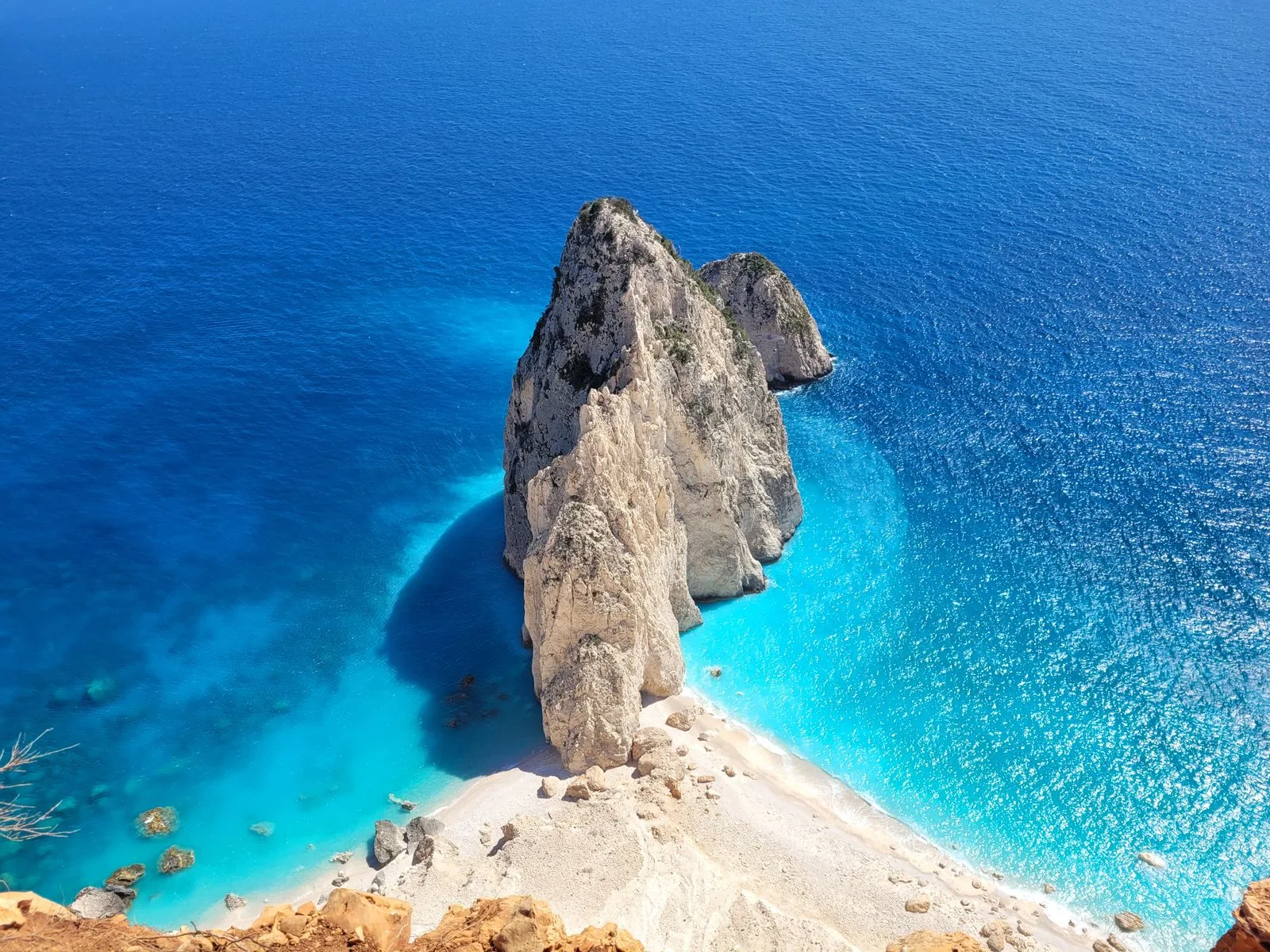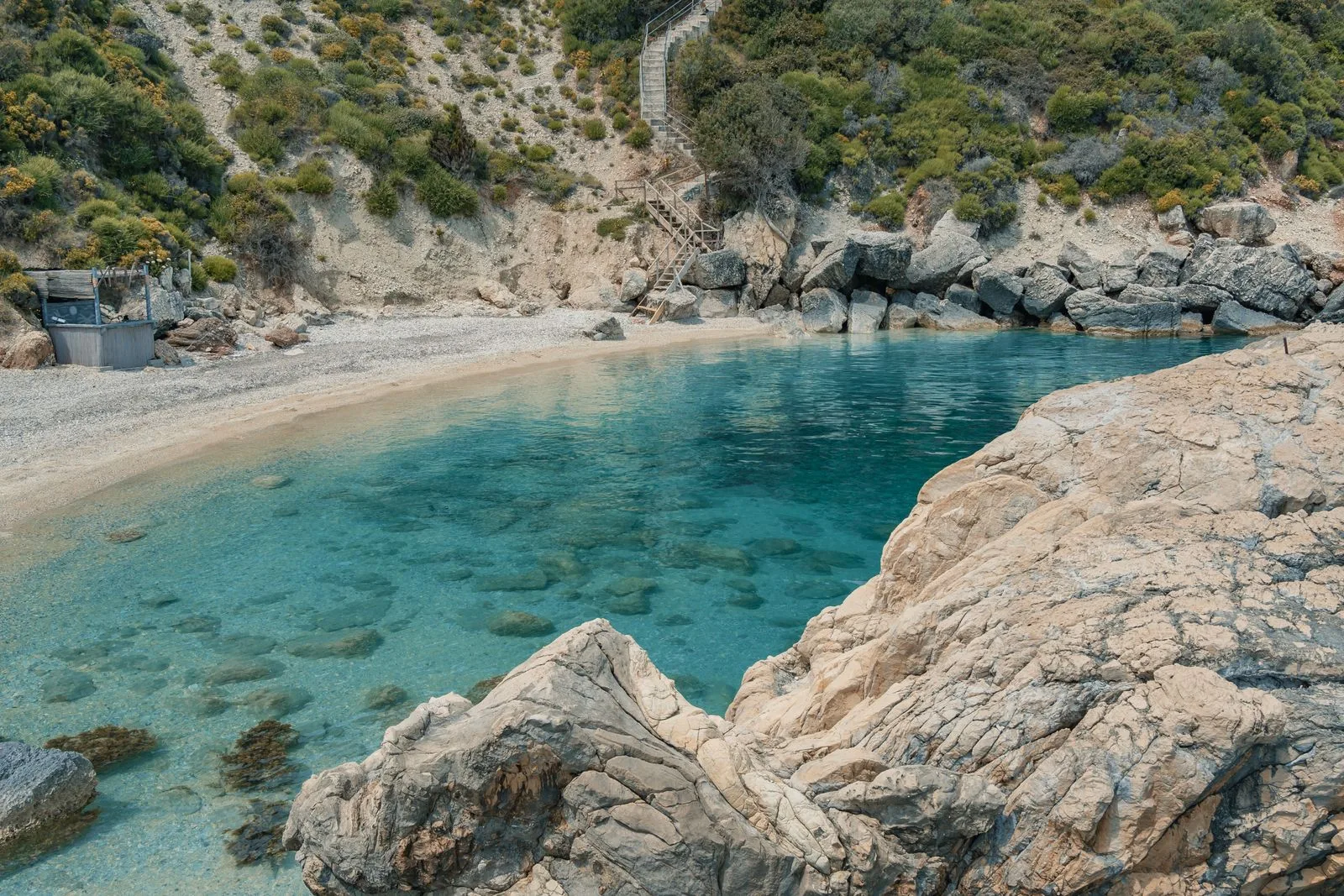
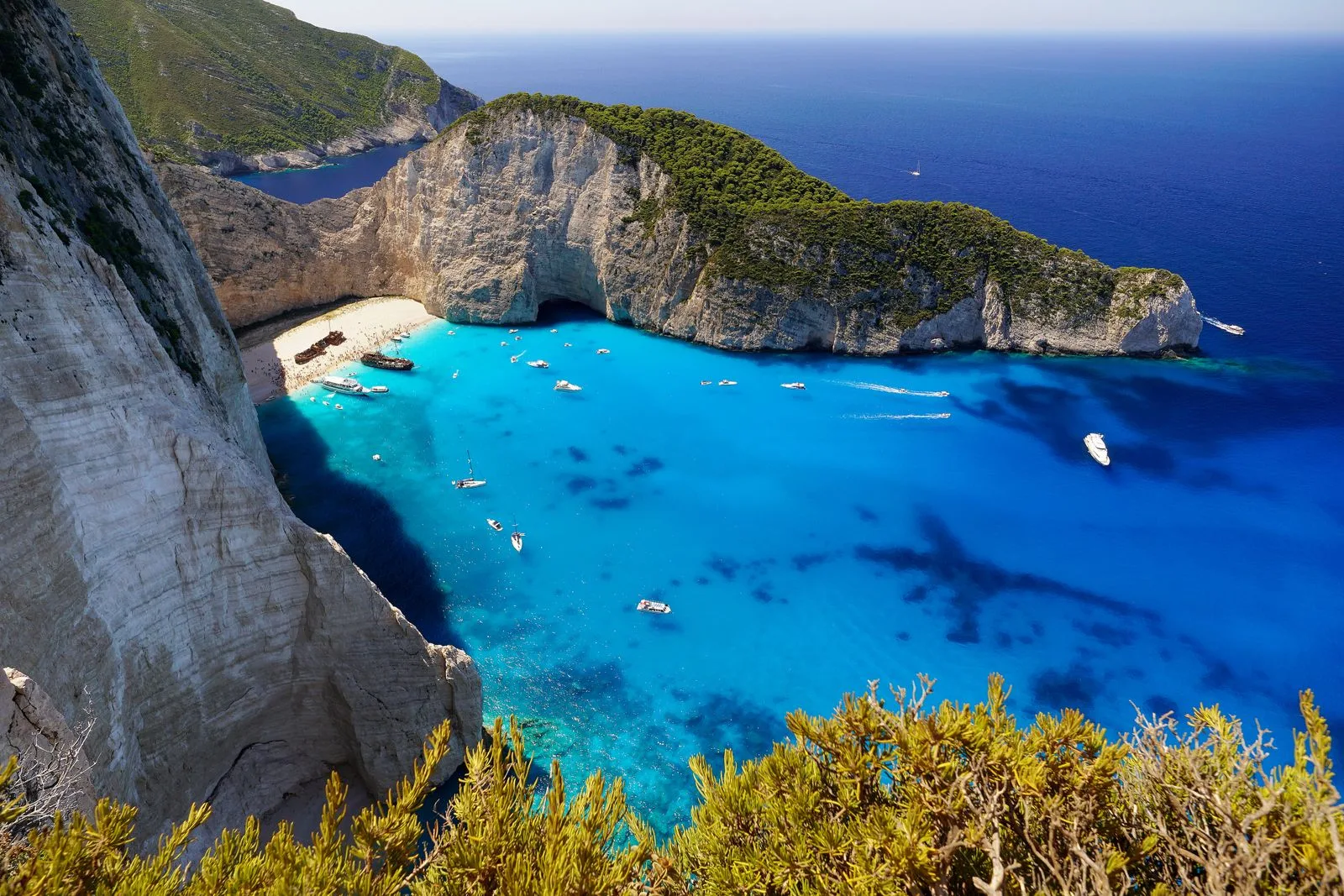
Navagio Beach — also known as Shipwreck Beach — is the most famous image of Zakynthos, and for many visitors, the single most recognisable view in all of Greece. A rusted freighter lies stranded on a white pebble cove, hemmed in by towering vertical limestone cliffs, with the Ionian Sea glowing an almost impossible shade of turquoise beyond. Whether you see it from the clifftop viewpoint or from a boat on the water, Navagio is a sight that stays with you.
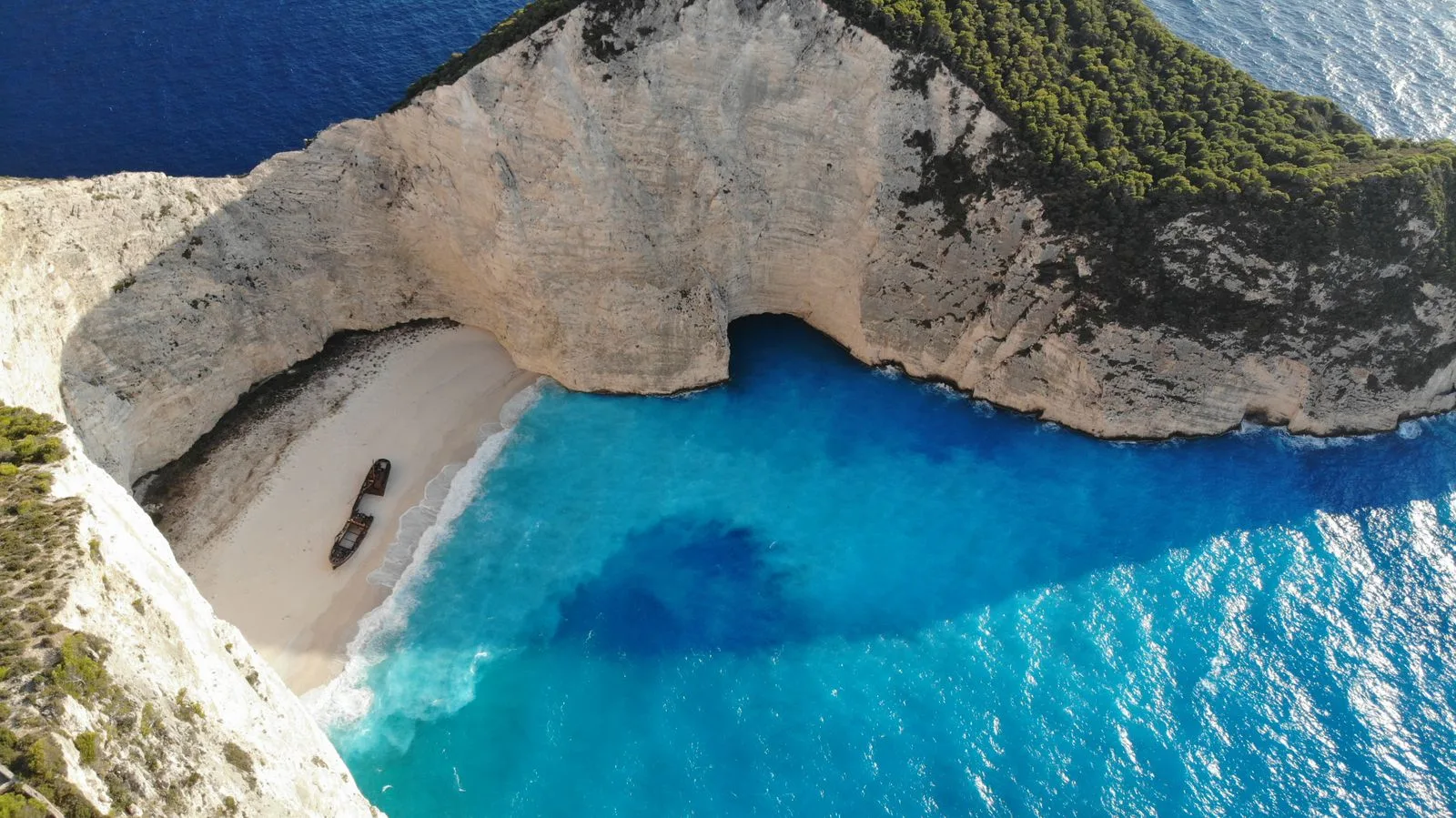
Navagio Beach is a small, enclosed cove on the north-western coast of Zakynthos, accessible only from the sea or from the clifftop viewpoint above. The beach itself is a strip of white pebbles backed by sheer limestone cliffs that rise hundreds of feet on three sides. The combination of the dramatic cliffs, the vivid turquoise water, and the rusted hull of the ship creates one of the most photographed scenes in the Mediterranean.
The Story Behind Navagio
Navagio is famous for a single, unforgettable visual: a rusted shipwreck on a white pebble beach, enclosed by towering white cliffs and lapped by impossibly turquoise water. It has become the signature image of Zakynthos — appearing on countless postcards, travel websites, and social media posts. The beach is also famous for its inaccessibility. There is no road down to the shore, which means visitors either view it from the clifftop above or arrive by boat. This sense of remoteness and drama is a large part of what makes Navagio so compelling.
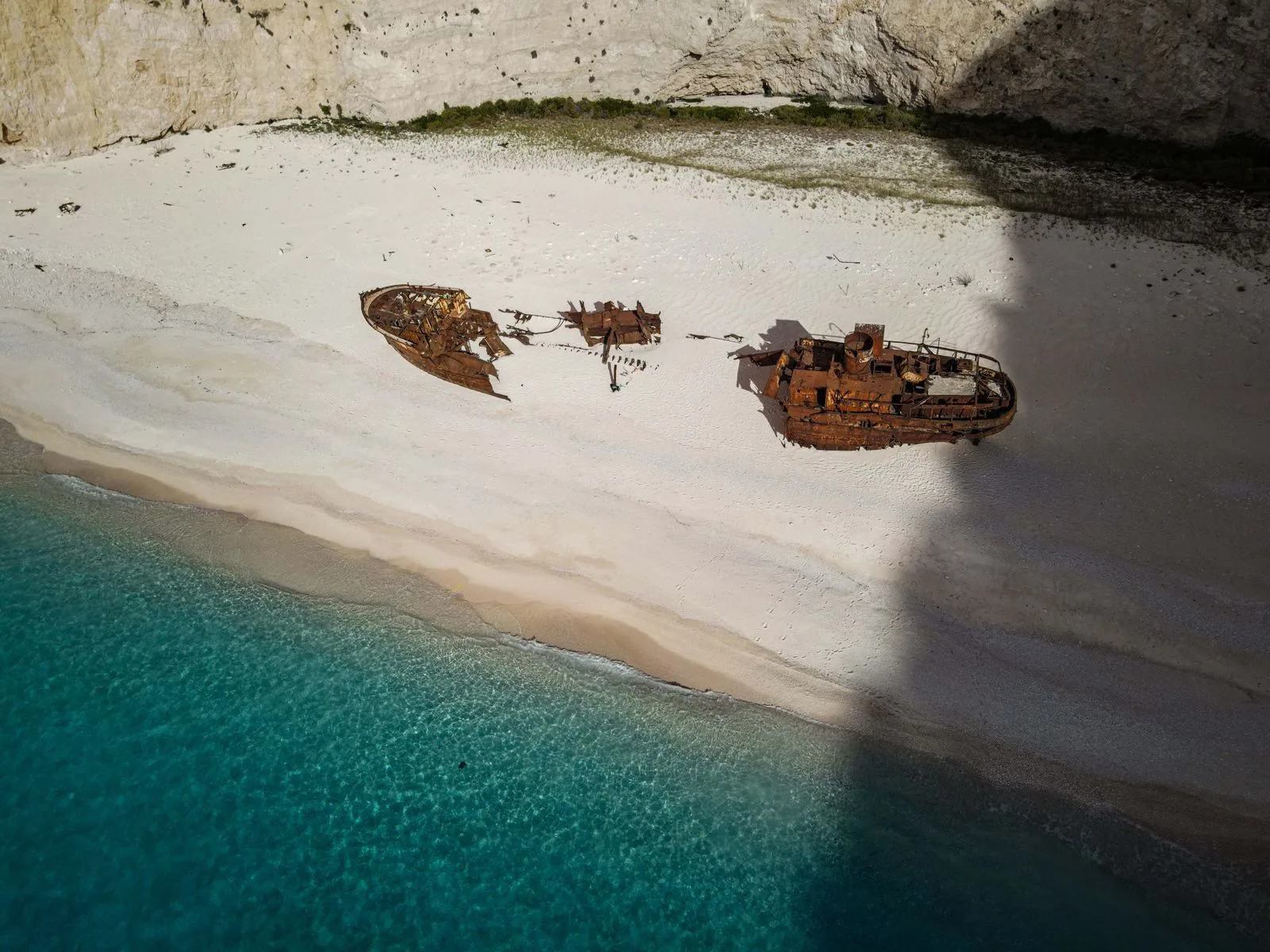
The vessel on the beach is the MV Panagiotis, a freighter that ran aground on the cove in the early 1980s. The exact circumstances have been the subject of much speculation over the years, with various accounts involving smuggling, storms, and mechanical failure. What is known is that the ship was washed ashore on this remote beach and could not be refloated, and over the decades it has become one of the most famous shipwrecks in the world. Today the wreck is a rusted skeleton of its former self, slowly being reclaimed by the salt, sun, and wind.
How to See Navagio
The only way to set foot on Navagio Beach is by boat. Boat tours depart from several points around the island, including the harbour at Porto Vromi on the western coast and from Agios Nikolaos in the north. The tours typically approach the cove from the sea, giving you a dramatic view of the cliffs from below and a chance to see the shipwreck up close. Access conditions may change depending on current safety regulations and official restrictions, so check the latest official information before travelling.
The alternative is the Navagio Viewpoint — the clifftop platform above the beach, and the spot from which the most iconic photographs of Shipwreck Beach are taken. The viewpoint looks directly down onto the cove, the shipwreck, and the turquoise water, with the sheer cliffs framing the scene on three sides. The scale of the cliffs, the colour of the water, and the surreal presence of the rusted ship combine into a scene that looks almost impossible — on a clear day, it is one of the most memorable views you will find anywhere in Greece.
How to Get to the Navagio Area
The Navagio viewpoint is on the north-western coast of Zakynthos, near the village of Anafonitria, and the most practical way to reach it is by car hire. Public transport does not serve this part of the island. From Zakynthos Town, drive north-west through the interior, following signs toward Anafonitria or Volimes. The road takes you through olive groves and small villages, and as you approach the western coast, the landscape becomes more dramatic with views of the sea opening up between the hills.
There is a parking area near the viewpoint, and from there a short walk leads to the viewing platform. The drive is on paved roads for most of the way, though the final stretch involves narrower rural roads typical of this part of the island.
Best Time to Visit
The Navagio viewpoint is stunning at any time of day, but the light changes dramatically. Mornings tend to be quieter, with the sun lighting the cove from the east and fewer crowds at the viewing platform. Midday brings the most direct light and the most intense turquoise colour in the water — ideal for the classic postcard shot — but also the most crowds, so arriving early or being patient is key. Late afternoon offers warmer light, a golden glow on the cliffs, and fewer people as the day-trippers begin to head back.
If you are combining Navagio with a boat trip, morning departures typically offer calmer seas and fewer boats at the cove. Always check sea conditions before booking a boat tour, as trips may be cancelled in rough weather.
What to Bring
- •A camera or phone with plenty of storage — Navagio is one of the most photographed places in Greece
- •Sunscreen and a hat — the viewpoint platform is fully exposed to the sun
- •Comfortable walking shoes for the path to the viewpoint
- •Water, especially if you are combining Navagio with other northern stops
- •Cash for parking and for boat tours if you plan to visit the beach from the sea
Safety and Visitor Information
The Navagio viewpoint sits on a clifftop, so take care near the edges and follow any safety barriers or signage in place. The cliff edge is natural and can be unstable in places — stick to the established viewing areas and do not climb on or over barriers. Access conditions at Navagio — including beach access, boat access, and viewpoint access — may change depending on current safety regulations and official restrictions, so check the latest official information before travelling.
Nearby Places and Exploring by Car
The area around Navagio has several other highlights within a short drive. The village of Anafonitria, near the viewpoint, has a historic monastery. The village of Volimes, further north, offers a taste of traditional Zakynthian life and is a good place to buy local products. On the eastern side of the northern coast, Xigia Beach is a striking sulphur-rich cove with turquoise water — a completely different landscape from the dramatic cliffs of Navagio. Further along the western coast, the rocky coves around Porto Limnionas offer another perspective on the island's geology.
A well-planned northern road trip might start with a morning visit to the Navagio viewpoint, continue through the villages of Anafonitria and Volimes, loop east to Xigia Beach for a swim, and end with a drive through the northern coastal roads with their dramatic sea views.
Ready to explore Zakynthos by car?
Book your rental car online and pay on delivery. No deposit, no credit card required.
Search Available Cars