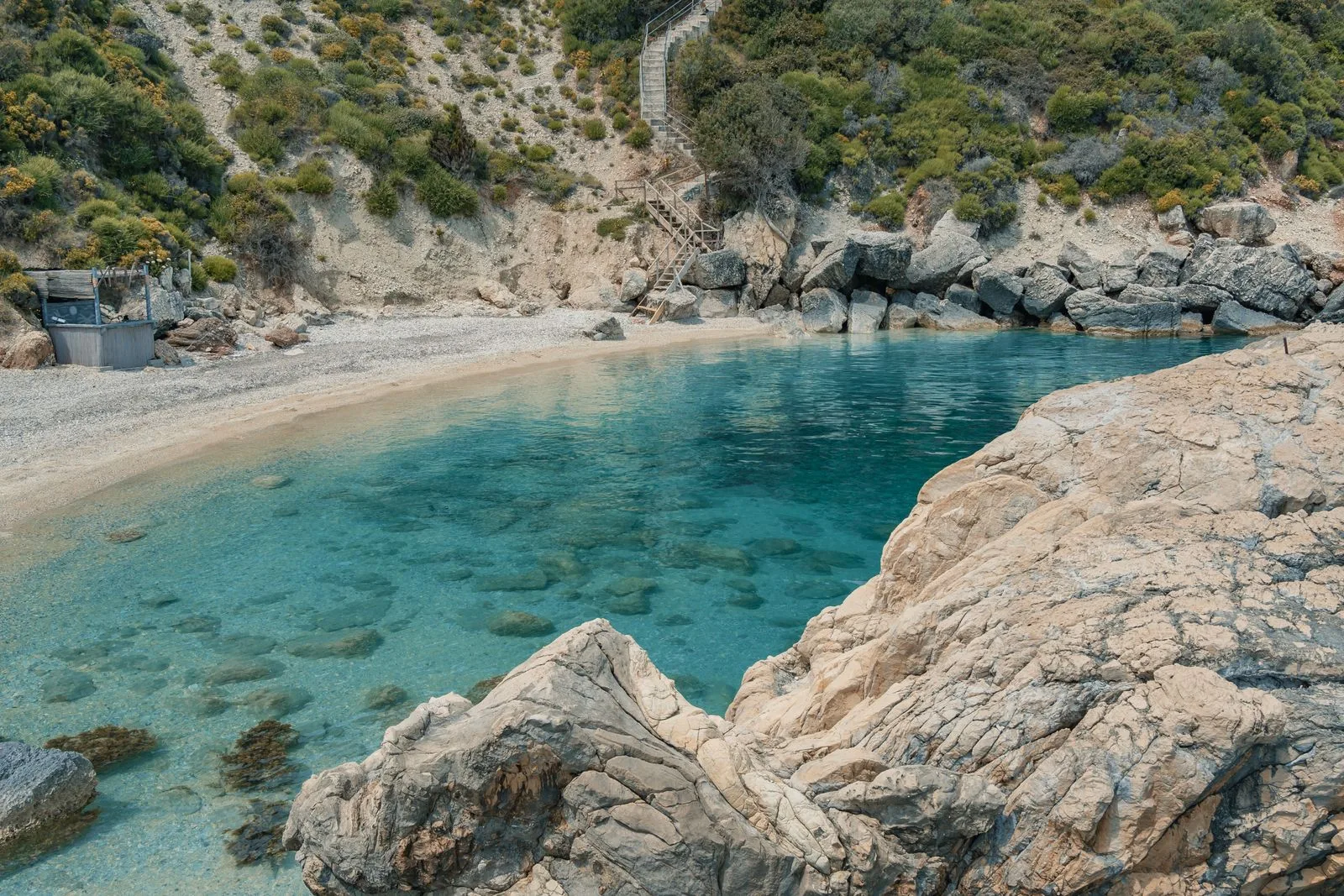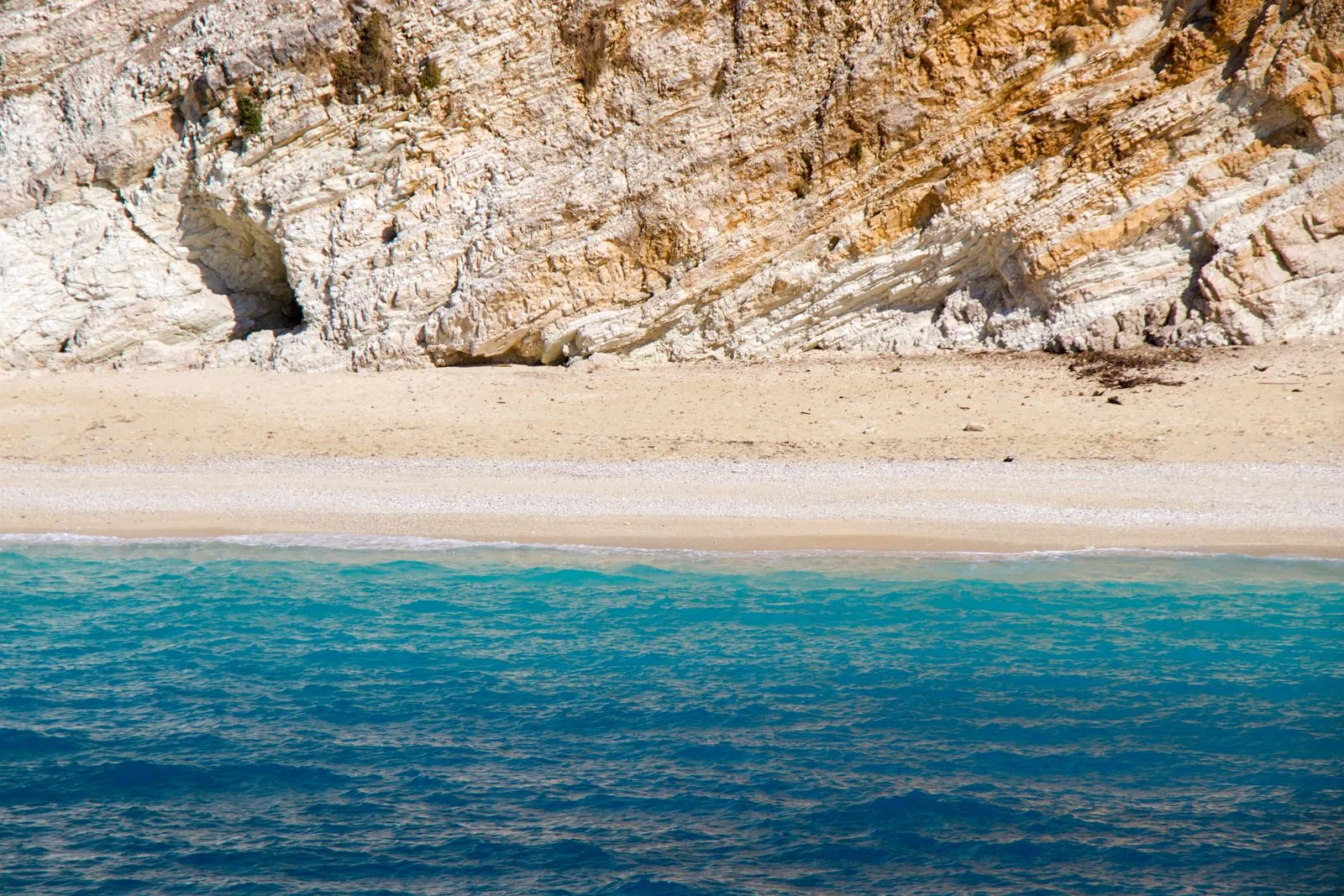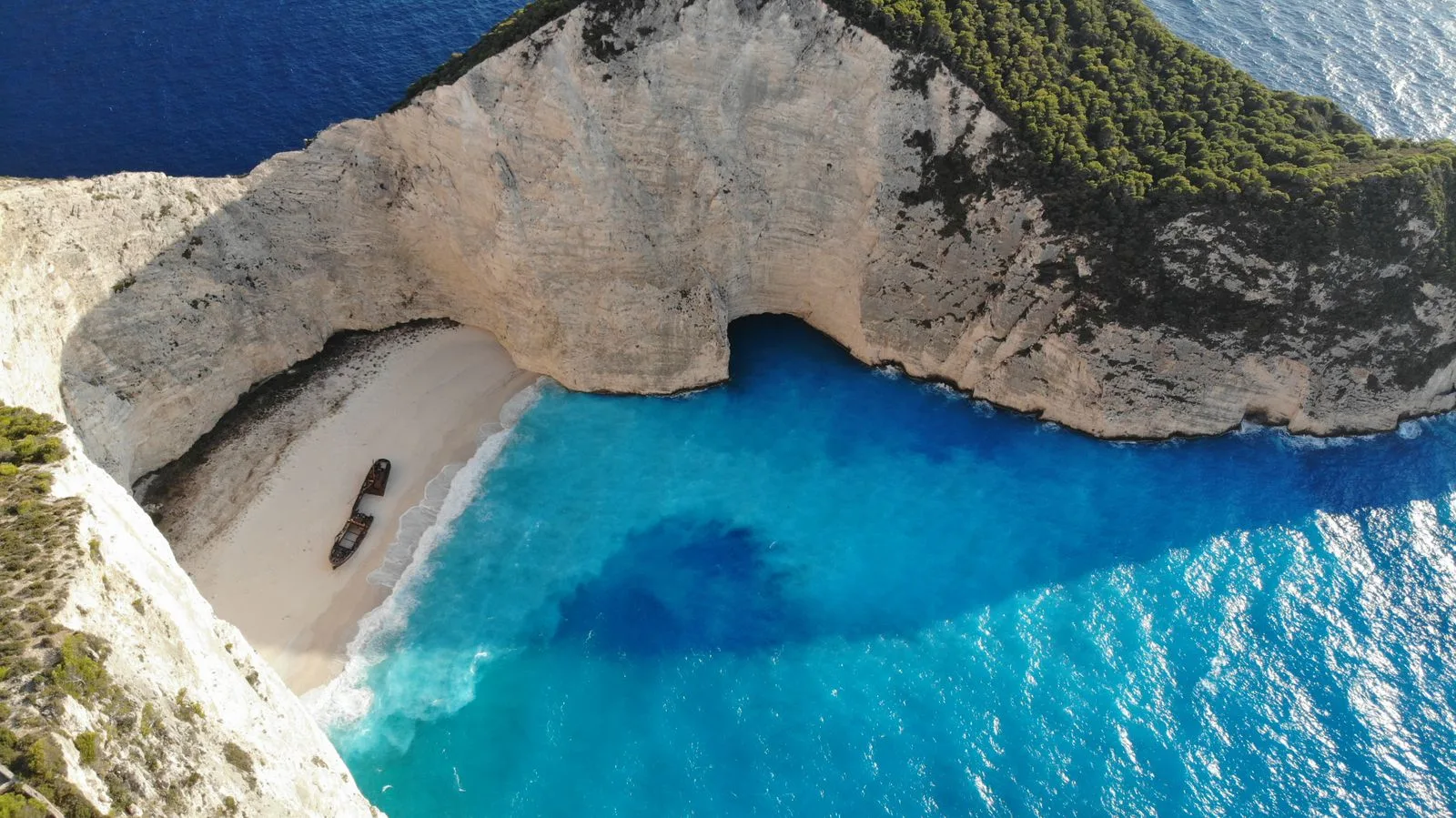
The Blue Caves are one of the most extraordinary natural attractions in Zakynthos — a series of sea caves carved into the white limestone cliffs of Cape Skinari at the northern tip of the island. The caves are named for the intense, almost electric blue light that fills them when the sun hits the water at the right angle, creating reflections that turn the inside of the caves a vivid, glowing blue. It is a sight that has to be seen to be fully understood.
Discover the Blue Caves of Zakynthos
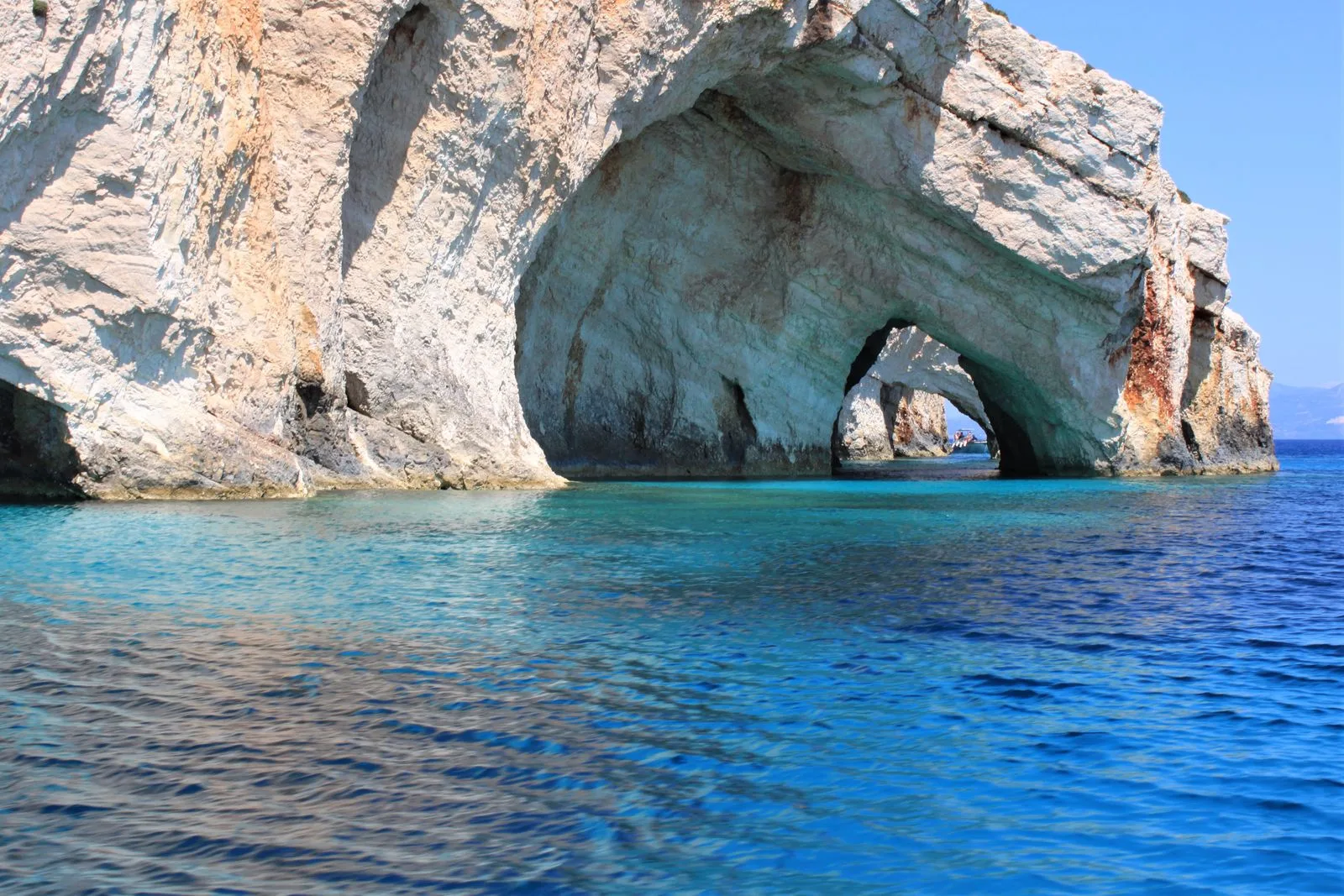
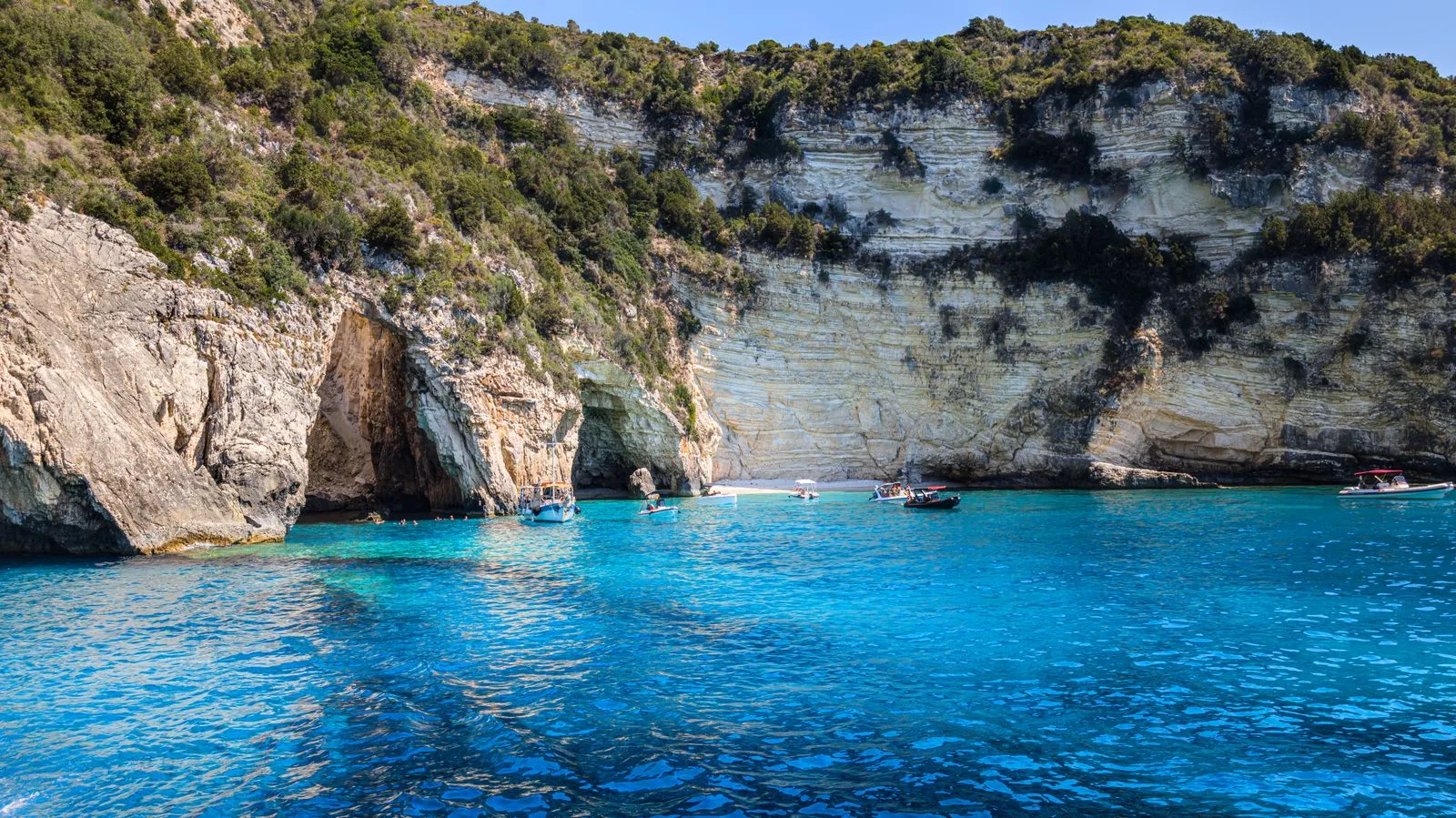
The Blue Caves are a network of natural sea caves along the northern coast of Zakynthos, around Cape Skinari. They were formed over thousands of years by the action of the sea on the soft white limestone that makes up this part of the coastline. The caves range from small openings in the rock to large arches and chambers that small boats can enter, and the water inside them is some of the clearest and most vividly coloured you will find anywhere on the island.
The caves are experienced from the sea — there is no road access to the caves themselves. Boat tours depart from several points around the northern coast, and the trip to the caves is part of the experience, with dramatic views of the white limestone cliffs and the deep blue Ionian Sea along the way.
Where are the Blue Caves?
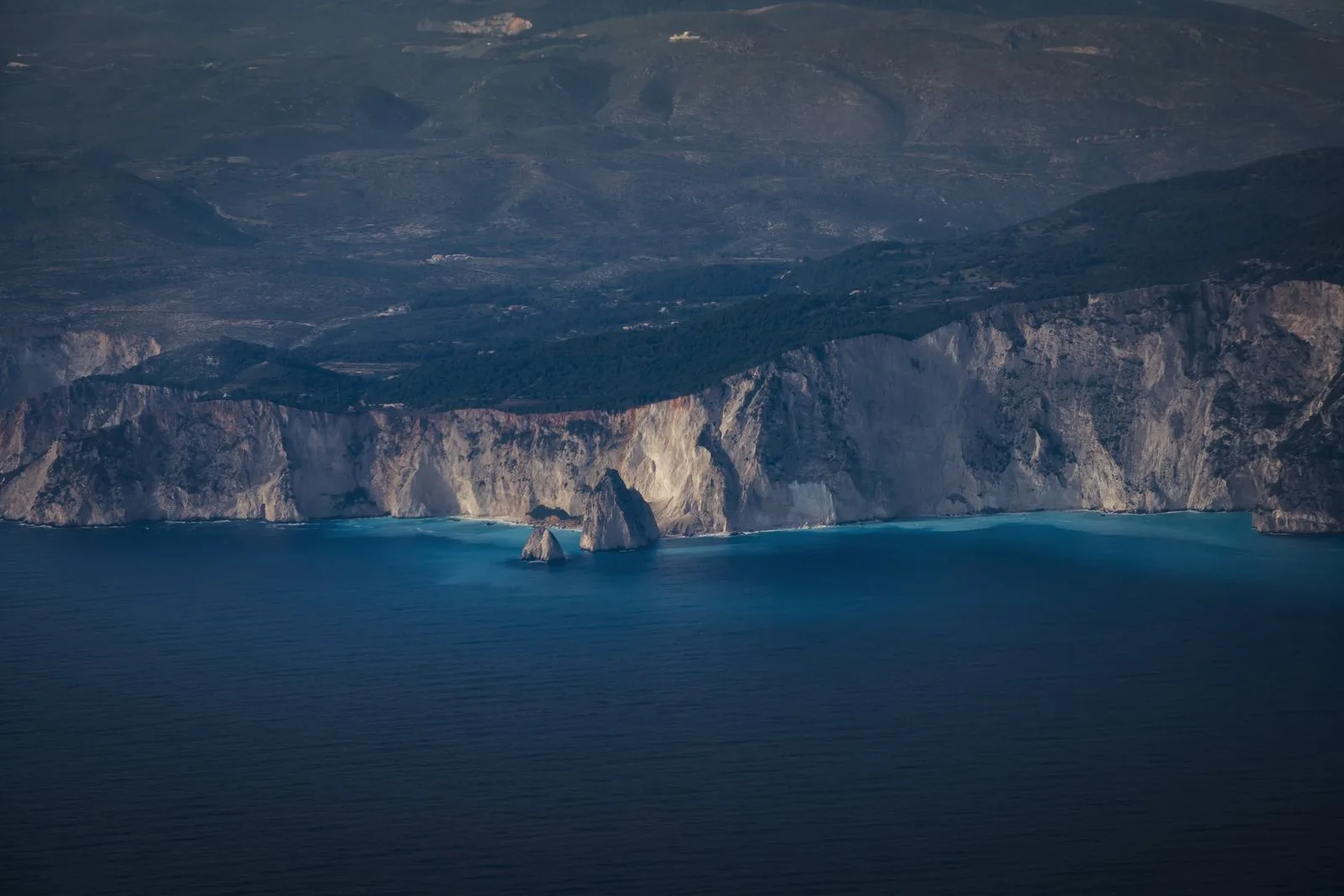
The Blue Caves are located at the northern tip of Zakynthos, around Cape Skinari. This is the closest point on the island to the neighbouring island of Kefalonia, and the coastline here is rugged and dramatic, with white limestone cliffs dropping straight into deep, clear water. The area is part of the wilder, less-developed northern part of Zakynthos, which is one of the most rewarding parts of the island to explore by rental car.
Why are They Called the Blue Caves?
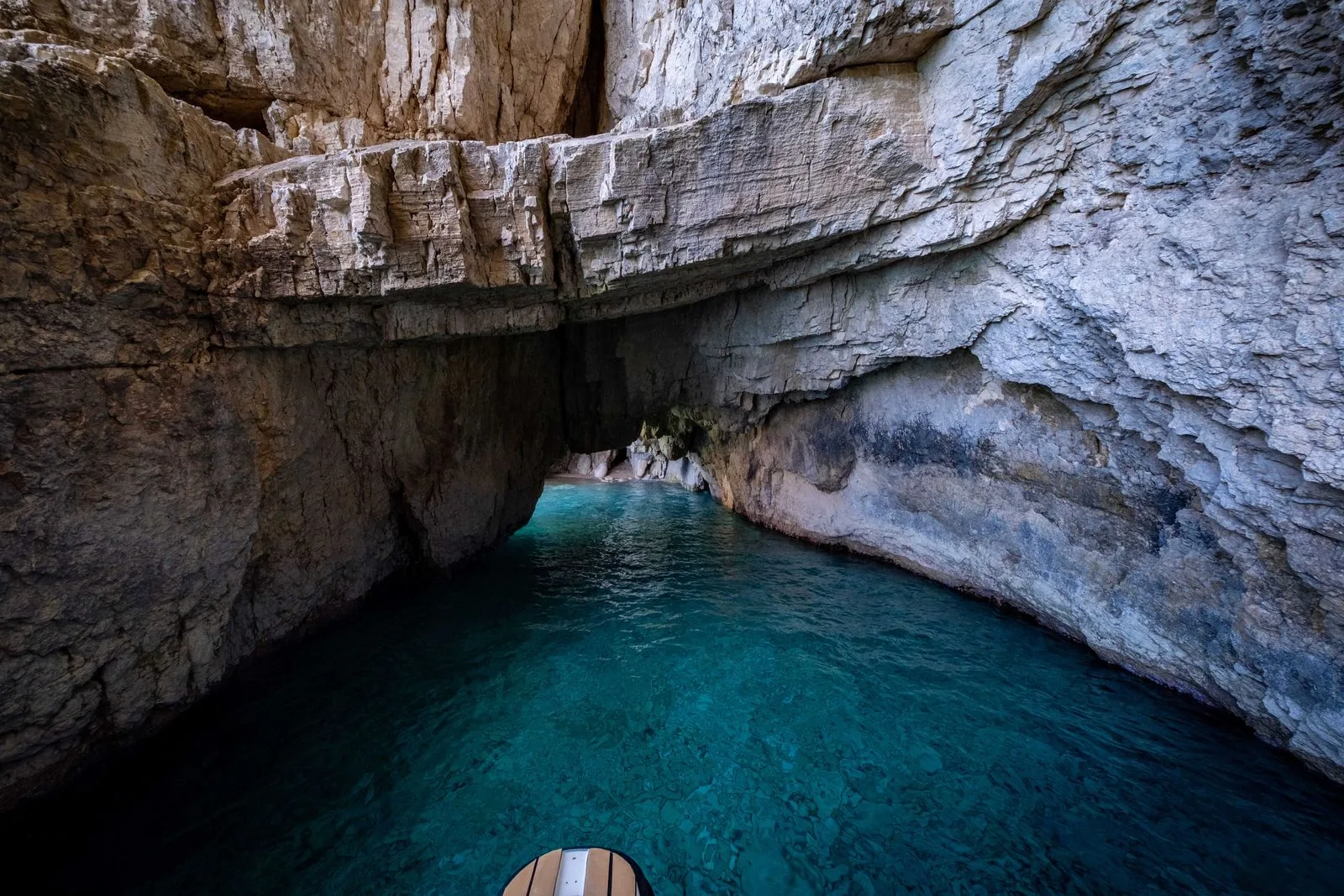
The name comes from the extraordinary optical effect that occurs inside the caves. When sunlight hits the surface of the sea outside the caves, it passes through the clear water and reflects off the white limestone seabed and walls. This reflected light bounces up into the caves, filling them with an intense, glowing blue colour that seems almost electric. The effect is strongest in the middle of the day when the sun is highest, and it is one of the most memorable natural sights you can experience in the Ionian Islands.
The experience of being on a small boat inside one of these caves, surrounded by glowing blue water and white rock, is genuinely unforgettable. It is one of the few natural phenomena in Greece that is best experienced from the water rather than from the shore, and it is a highlight of any visit to northern Zakynthos.
How to Visit the Blue Caves
Boat tours depart from several points around the northern coast of Zakynthos, with the most common departure points at Agios Nikolaos in the north-east and Porto Vromi on the western coast. Tours typically include a guided trip along the northern coastline, entering several of the caves where conditions allow, and often combine the Blue Caves with a stop at Navagio Beach.
The boat trip is the experience. Small boats navigate along the base of the white cliffs, entering caves and arches where the water glows with that characteristic blue light. The boat operators know the best caves to enter depending on the sea conditions and the time of day, and they will time the visit to maximise the blue effect when the sun is highest.
Some tours allow swimming near the caves when conditions permit, which is an extraordinary experience — the water is clear, deep, and intensely blue. Whether swimming is possible depends on sea conditions and safety considerations on the day, so it is best to check with the boat operator in advance.
Can You Reach the Blue Caves by Car?
The caves themselves cannot be reached by car — they are at the base of the cliffs at sea level, and there is no road or path down to them. However, a car is the practical way to reach the boat departure points and explore the wider northern Zakynthos area, which is some distance from the main resort areas.
From Zakynthos Town, the drive north to the Cape Skinari area takes you through the interior of the island and then along the northern coast. The road passes through small villages and olive groves, and as you approach the northern tip, the landscape opens up with views of the Ionian Sea and, on a clear day, the neighbouring island of Kefalonia on the horizon.
The roads in northern Zakynthos are generally quieter than the southern resort areas, though they become narrower and more winding as you approach the coast. A standard car is perfectly suitable for this drive. The main consideration is timing your arrival to match your boat departure, so it is worth checking the latest boat schedules before you set off.
Cape Skinari is the northernmost point of Zakynthos, and the area around it is some of the most dramatic on the island. The white limestone cliffs drop straight into deep, clear water, and the coastline is punctuated by caves, arches, and rock formations. There is a lighthouse at the tip of the cape, and the views from the land out over the Ionian Sea toward Kefalonia are spectacular.
Best Time to Visit
The best time to visit the Blue Caves is in the middle of the day, when the sun is highest and the blue effect inside the caves is at its most intense. The effect depends on sunlight, so it is weaker on cloudy days and non-existent in the early morning or late afternoon when the sun is low. For this reason, most boat tours are scheduled around the middle of the day.
In terms of the season, the caves are accessible from late spring through early autumn, weather permitting. Boat tours operate most regularly during the peak summer months, but schedules can vary depending on sea conditions and demand.
For photography, the same rule applies: the middle of the day, when the sun is highest, produces the most intense blue light inside the caves. The reflections off the water and the white limestone create a glow that is genuinely difficult to capture in a photograph — the reality is even more vivid than most images suggest. If you have a waterproof camera or a phone in a waterproof case, shooting from the water gives a completely different perspective, while from the boat a wide-angle lens helps capture the scale of the caves.
What to Bring
- •A camera or phone with plenty of storage — the blue light inside the caves is extraordinary
- •Sunscreen and a hat — there is little shade on the boats
- •A waterproof bag or case for your phone and valuables
- •Swimwear and a towel, in case swimming is allowed on the day
- •Sunglasses — the glare off the white limestone and water is intense
- •Cash for the boat tour and any refreshments
Safety and Practical Tips
Boat trips to the Blue Caves are generally safe and well-organised, but there are a few things to keep in mind. The sea around the northern tip can be choppy, so if you are prone to seasickness, consider taking a remedy before you depart. Always follow the instructions of the boat operator, particularly when entering and exiting the caves. If swimming is allowed, only enter the water when the operator says it is safe to do so.
Nearby Places to Visit
The northern tip of Zakynthos has several attractions within a short drive of the Blue Caves departure points. The village of Volimes is known for its traditional character and local products. On the eastern side of the northern coast, Xigia Beach is a striking sulphur-rich cove with turquoise water — a completely different experience from the caves, but one that pairs well on a northern road trip. Our guide to Xigia Beach covers everything you need to plan a stop there.
On the western side of the northern coast, the Navagio viewpoint offers the iconic view of Shipwreck Beach from the clifftop above. Many boat tours to the Blue Caves also stop at Navagio, but seeing it from the viewpoint by car is a different and equally memorable experience. Our guide to Navagio Beach covers the viewpoint, the shipwreck story, and how to get there by car.
The Blue Caves and Navagio Beach are the two headline attractions of northern Zakynthos, and they pair naturally as a combined itinerary. Many boat tours from the northern coast visit both in a single trip — approaching Navagio from the sea and then continuing along the coast to the caves, or vice versa.
A good northern itinerary might be to take a morning boat trip to the caves and then drive east to Xigia for an afternoon swim — the caves are about dramatic geology and blue light, while Xigia is about swimming in a sheltered mineral-rich cove, and together they make for a memorable day.
Ready to explore Zakynthos by car?
Book your rental car online and pay on delivery. No deposit, no credit card required.
Search Available Cars